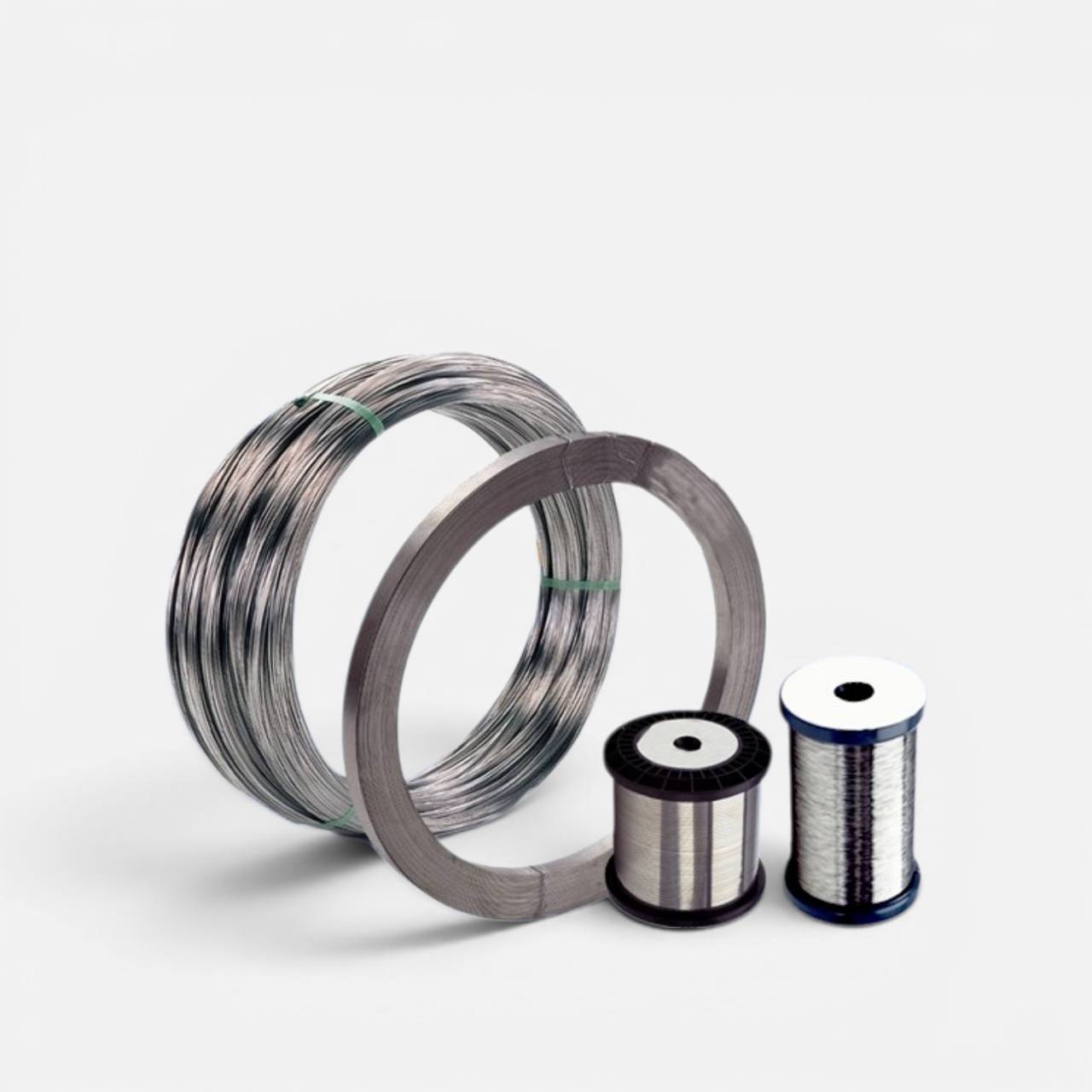
Heater Wire (or Heating Element Wire)

Heater Wire (or Heating Element Wire)
is a type of metal wire designed to “convert electrical energy into heat” when electric current flows through it, based on the principle of electrical resistance.
Principle of Operation
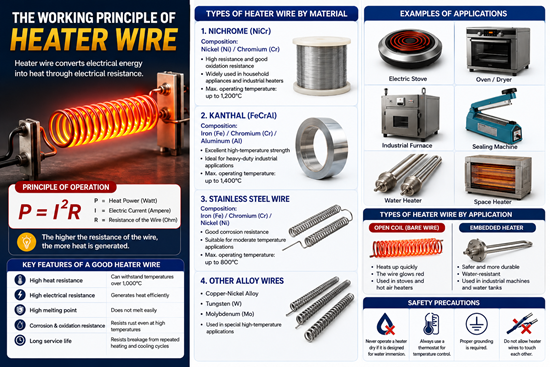
When electric current flows through a wire with electrical resistance, energy is lost in the form of heat. This is expressed by the formula:
P=I2RP = I^2RP=I2R
Where:
• P = Heat Power (Watts)
• I = Electric Current
• R = Electrical Resistance of the wire
The higher the resistance of the wire → the more heat is generated.
Properties of a Good Heater Wire
A high-quality heater wire should have the following important properties:
1.High Heat Resistance
Some heater wires can withstand temperatures exceeding 1,000°C.
2.High Electrical Resistance
This allows the wire to generate heat efficiently when electric current flows through it.
3.High Melting Point
The wire must not melt easily under continuous high-temperature operation.
4.Corrosion and Oxidation Resistance
Because heater wires are constantly exposed to heat, they should resist rust and surface oxidation.
5.Long Service Life
A good heater wire should not break easily, even after repeated heating and cooling cycles.
Popular Materials Used for Heater Wires
• Nichrome (Nickel-Chromium Alloy)
Widely used due to its excellent heat resistance and durability.
• Kanthal (Iron-Chromium-Aluminum Alloy)
Suitable for very high-temperature applications and industrial heaters.
• Stainless Steel Heater Wire
Commonly used in applications requiring moderate heat and corrosion resistance.
Heater wires can be classified in several ways, but when categorized by the “wire material” — which is the most common method used in industrial applications and electrical appliances — the main types are as follows:
Types of Heater Wire
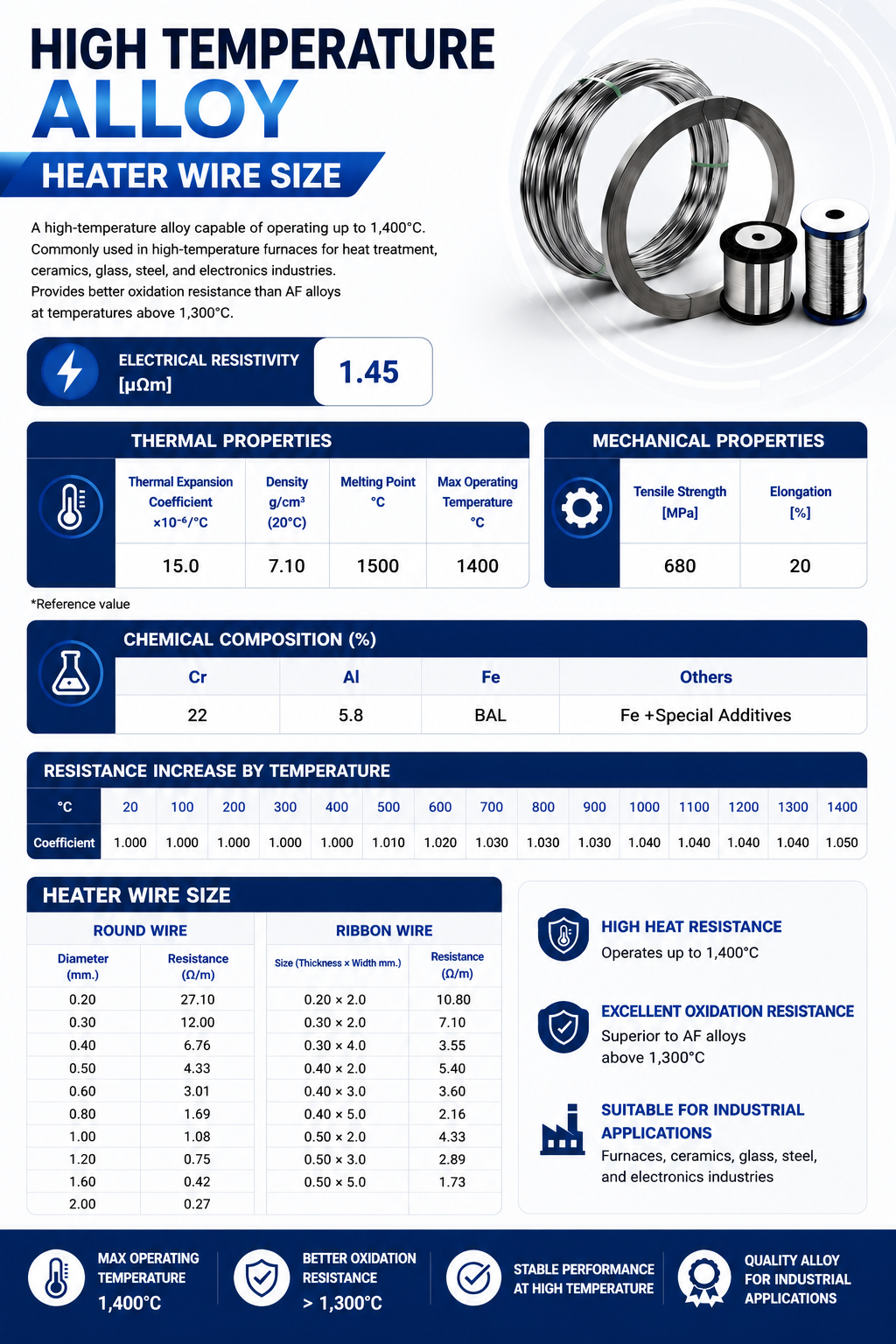
Nichrome (NiCr)
Nichrome Wire
Composition:
Nickel (Ni) / Chromium (Cr)
Key Features
• Extremely high heat resistance
• Long service life
• More energy-efficient in certain applications
• Maximum operating temperature up to approximately 1400°C
• Commonly used in furnaces and heavy industrial applications
Classification by Application Type
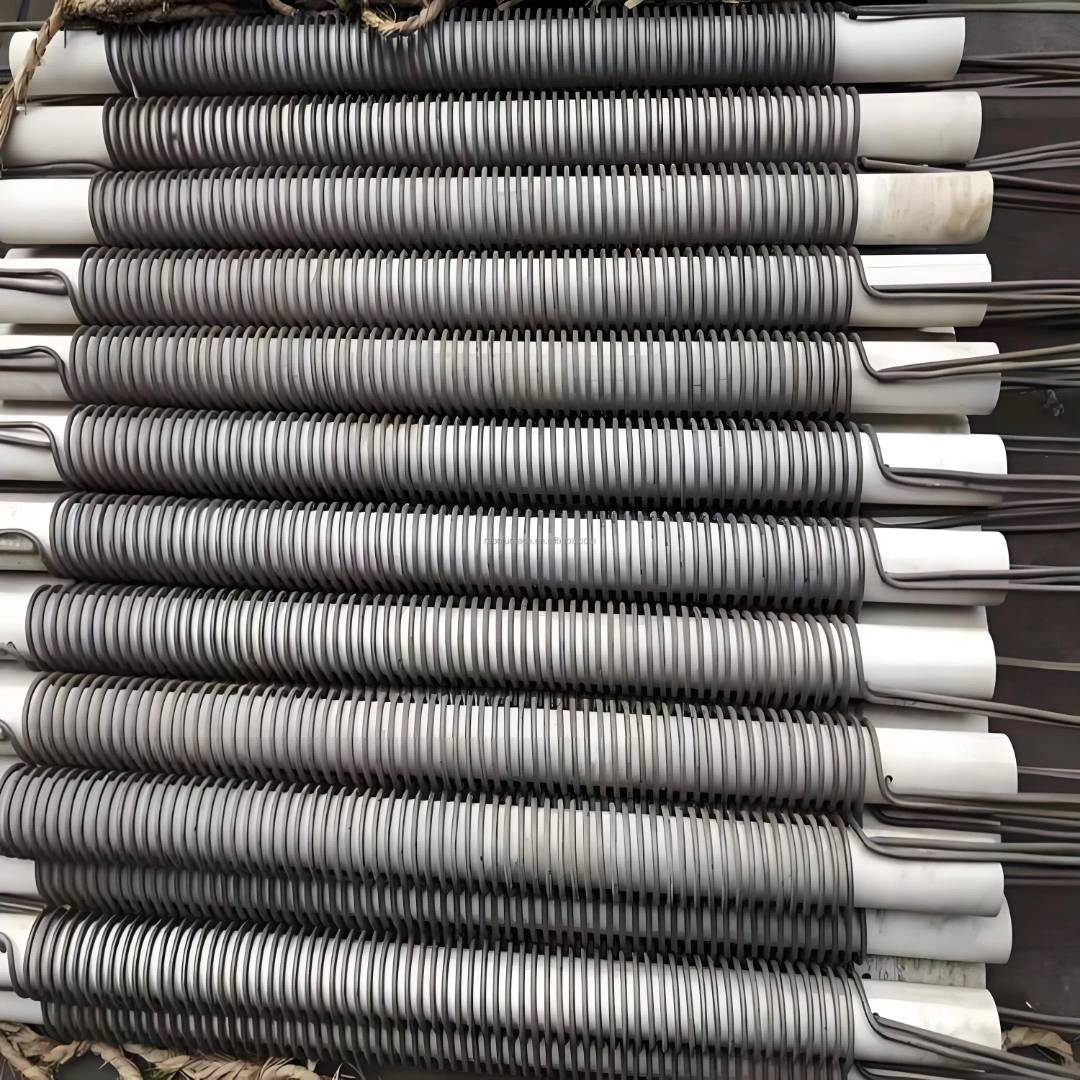
1. Open Coil Heater Wire
• Heats up quickly
• The wire glows red when operating
• Commonly used in stoves and hot air heaters
2. Embedded Heater
• Safer design
• Water-resistant
• Commonly used in industrial machinery and water heating tanks
Simple Comparison
• Open Coil → Faster heating, exposed wire, suitable for air heating
• Embedded Heater → Safer, more durable, suitable for liquid heating and industrial systems
Safety Precautions
• Never operate a heater dry if it is designed for water immersion
• Always use a thermostat for temperature control
• Proper grounding is required
• Do not allow heater wires to touch each other